

A practical guide for facility managers on reducing breakdowns, ensuring safety, and extending the lifespan of automatic doors.
Automatic doors are a critical part of daily operations in modern facilities across Saudi Arabia. From hospitals and airports to shopping malls and corporate buildings, these systems handle continuous traffic and play a direct role in safety, accessibility, and user experience.
However, despite their importance, automatic doors are often overlooked until a failure occurs. Without proper maintenance, small technical issues can quickly escalate into major operational disruptions, safety risks, and costly emergency repairs. Preventive maintenance is not optional — it is essential for long-term reliability and compliance.
In this article, we explain why regular automatic door maintenance matters, the risks of reactive repairs, and best practices for facilities operating in Saudi Arabia.
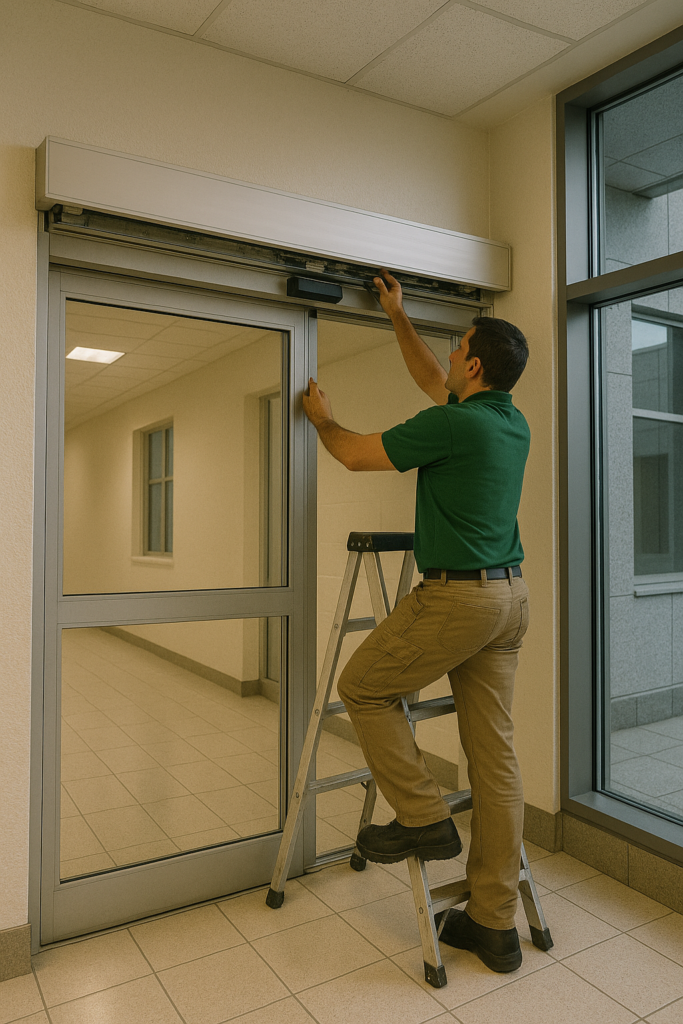
Preventive Maintenance Keeps Automatic Doors Safe and Reliable
Regular inspections reduce breakdowns, extend lifespan, and ensure uninterrupted operation.
Preventive Maintenance vs. Reactive Repairs
Many facilities rely on reactive maintenance — fixing doors only after a breakdown happens. While this approach may seem cost-effective in the short term, it often results in higher expenses and unexpected downtime.
Preventive maintenance, on the other hand, focuses on scheduled inspections, early fault detection, and system optimization before failures occur.
Key differences between the two approaches:
Preventive Maintenance
Planned service visits and inspections
Reduced risk of sudden breakdowns
Longer system lifespan
Improved safety and compliance
Predictable maintenance costs
Reactive Repairs
Emergency call-outs
Unexpected downtime
Higher repair and spare part costs
Increased safety risks
Increased safety risks
Shortened equipment lifespan
Facilities that shift from reactive repairs to preventive maintenance programs consistently experience fewer disruptions and better operational control.
Common Automatic Door Failures Caused by Poor Maintenance
Automatic door systems are made up of mechanical, electrical, and sensor-based components. When maintenance is neglected, several issues commonly appear.
Some of the most frequent failures include:
Sensor misalignment, leading to delayed opening or unsafe closing
Motor wear and overheating due to continuous operation without calibration
Controller or control board failures caused by dust, heat, or voltage instability
Unbalanced door speed, increasing strain on mechanical parts
Most of these issues develop gradually and can be easily detected during routine inspections — long before they result in complete system failure.
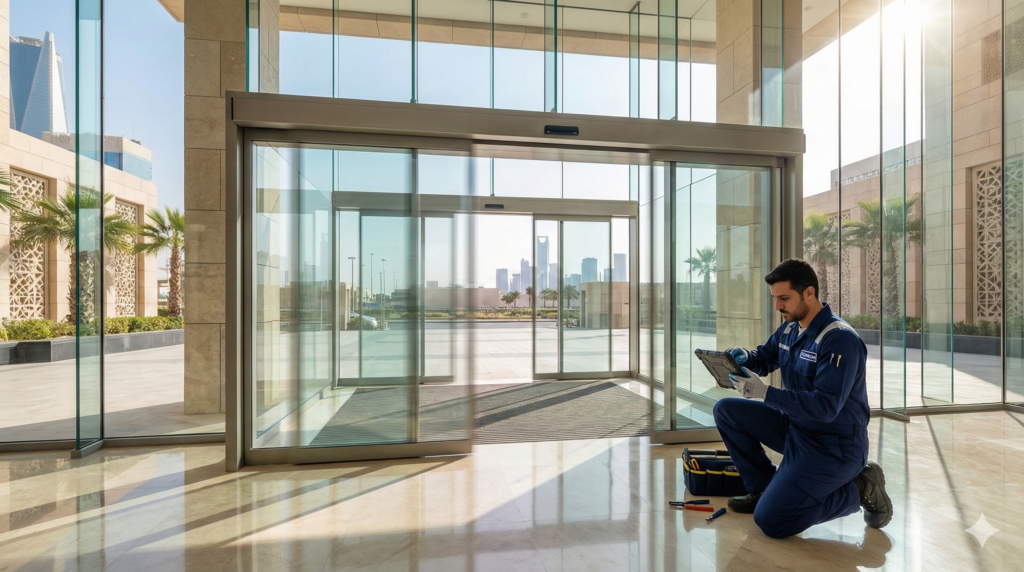
Why Preventive Service is the Secret to Flawless Automatic Door Performance
Don’t wait for a breakdown. Learn how scheduled maintenance protects your investment, reduces repair costs, and ensures a luxurious entrance experience for your clients.
Why Preventive Maintenance Is Critical in Saudi Arabia
Operating automatic doors in Saudi Arabia presents unique environmental and operational challenges that make preventive maintenance even more important.
High ambient temperatures, dust exposure, and intensive daily usage place additional stress on door systems. Facilities such as hospitals, transportation hubs, and often operate 24/7, leaving little room for error.
Regular maintenance helps facilities:
Adapt systems to extreme climate conditions
Maintain consistent performance under heavy traffic
Meet local safety and operational standards
Avoid service interruptions during peak hours
Without preventive care, automatic doors in high-demand Saudi environments are far more likely to experience premature failure.
Best Practices for Long-Term Automatic Door Reliability
To ensure consistent performance and minimize operational risks, facilities should follow a structured maintenance strategy rather than ad-hoc repairs.
Recommended best practices include:
Using genuine spare parts approved for the specific door system
Scheduling periodic inspections based on usage volume
Regularly checking sensor calibration and door speed settings
Monitoring motor load and control unit performance
Keeping clear service records and diagnostics reports
Ensuring 24/7 emergency support availability for critical locations
Facilities with annual maintenance contracts typically achieve better reliability, lower total operating costs, and improved user safety over time.
Preventive Maintenance Is an Investment, Not a Cost
Automatic doors are long-term infrastructure assets. Treating maintenance as a proactive investment — rather than a reactive expense — allows facilities to protect users, reduce downtime, and extend system lifespan.
By implementing a preventive maintenance program, facility managers gain greater control over performance, compliance, and budgeting while avoiding unnecessary emergencies.
At TSCO, we support facilities across Saudi Arabia with certified technicians, genuine spare parts, structured maintenance programs, and 24/7 emergency support — ensuring automatic doors remain safe, reliable, and ready for continuous operation.

Leave a Reply